Who Were They? Floyd Odlum
November 16, 2026
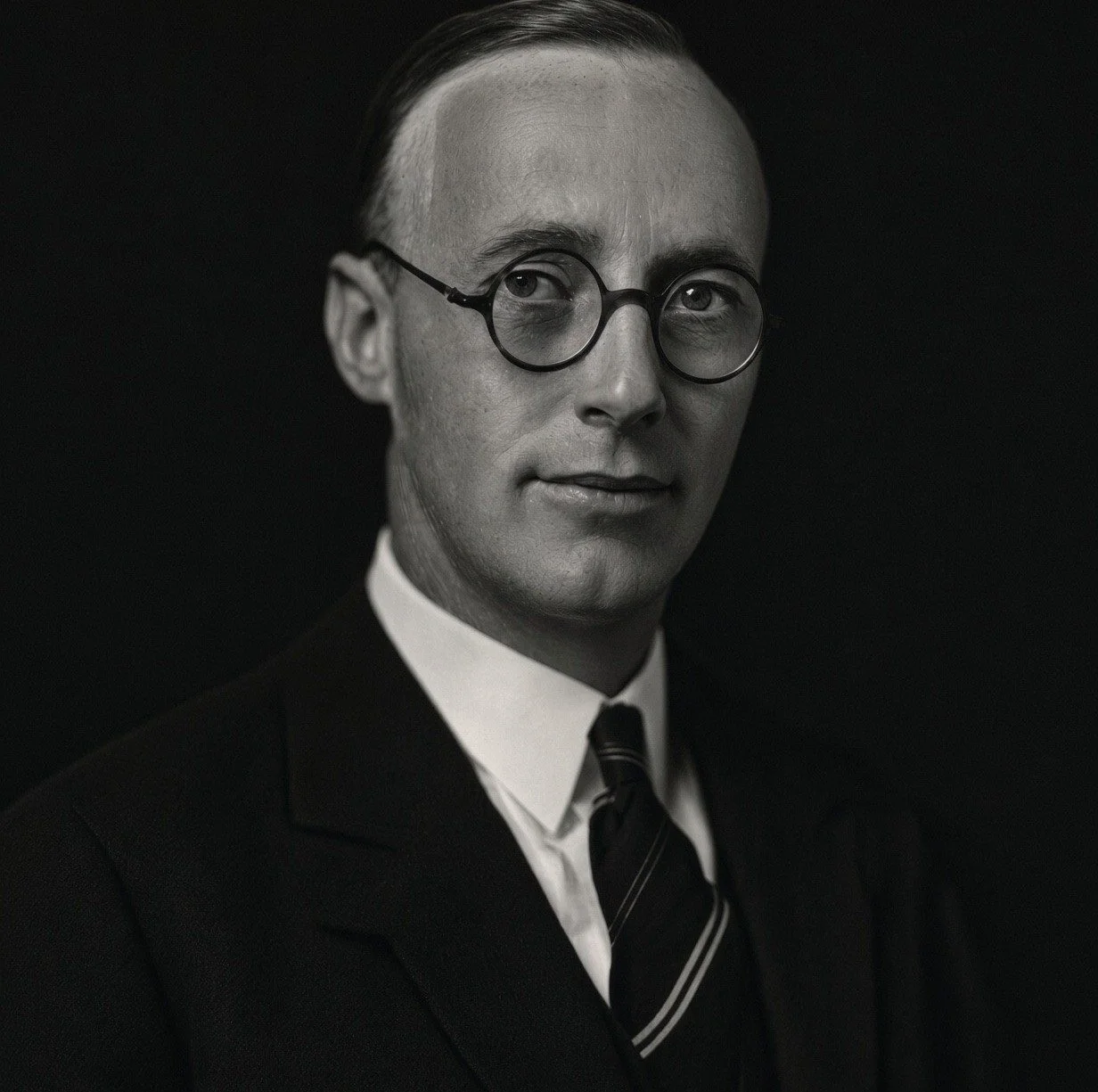
LOGAN CANYON, Utah — Picture a box with exactly $100 inside it. Now picture someone offering to sell you that box for 60. In 1932, Floyd Odlum was the man buying. He would later stand up in Salt Lake City and recite a poem about a cabin on the Logan River. "Ship me westward to the mountains," it goes. "Put me off at 'Hatch's place.'"
A Preacher's Son, and a $5 Ticket
Odlum was the youngest child of a Methodist minister. A friend sold him the unused half of a round-trip ticket to Salt Lake City for $5, and Utah Power & Light hired him on trial. He married Hortense McQuarrie, who went by Tenny.
In 1923 he and George Howard started an investment company with their wives on a stake of $39,600. They grew it to nearly $700,000 in 2 years. It became Atlas Corporation. As the Depression deepened, Atlas bought struggling investment trusts for less than the cash and securities inside them were worth. By 1933 he was counted among the 10 wealthiest men in the United States, and was being called "Fifty-Per-Cent Odlum."
A Guitar on the Veranda
Odlum belonged to Hatch's Camp by marriage. Hortense was the sister of Anne McQuarrie, who married Lorenzo Boyd Hatch. Around 1929, an Odlum lodge rose at the camp beside the Hatch family's cabins. A 1933 New Yorker profile said that at his Utah camp he liked to sit on the veranda strumming a guitar while Hortense and her sisters sang. Later he sold Atlas's controlling stake in RKO to Howard Hughes. He died on June 17, 1976, in Indio, California, at 84.
Back to the Logan River
In April 1955, introduced in Salt Lake City by Eastman Hatch, a son of the man who built Hatch's Camp, Odlum recited a poem he had written about a cabin on the Logan River. The full poem, as printed in the 1928 memorial booklet for Hezekiah Eastman Hatch, is in the PDF.
Owner Cameron Jensen writes that he had always known Odlum as a man of enormous wealth, then learned he truly loved this place. "Decades later, when he came back to Utah, he still recited his poem about Hatch's Camp, a poem that touches very close to home for me." He kept coming back to one question: what does it really mean to leave a legacy? "When is enough, enough?"